Peter Gleick of the Pacific Institute about “peak water”
 Dr. Peter Gleick, President of The Pacific Institute talks about “peak water” and
related issues that have an impact on all of us. LISTEN (14 min)
Dr. Peter Gleick, President of The Pacific Institute talks about “peak water” and
related issues that have an impact on all of us. LISTEN (14 min)
 West Marrin is a water scientist who’s written two outstanding books on the subject, including most recently, “Altered Perceptions; Addressing The Real Water Crisis”.
West’s pioneering work emphasizes the need for a more intuitive,
experiential approach, drawing from the wisdom of our ancestors. We’ll learn how our perception of water may be the
key to better conservation practices at the personal and policy levels. LISTEN (9 min)
 Nate Hanson, Vice President of NextEra Energy Resources,
the largest generator of renewable energy in the U.S. Hanson talks
about an innovative new program that gets consumers and corporations
involved to help lead us into the next, greener era!
LISTEN ( 22 min)

Peter Gleick, President of the Pacific Institute talks about the connections between water scarcity, climate change, and the fate of billions: "There are a billion people who don’t have access to safe drinking water. There are more than 2.5 billion people who don’t have access to adequate sanitation services. There are hundreds of millions of cases of water-related diseases every year. What we have is a failure of governments and organizations to meet these basic human needs." LISTEN (11 min)
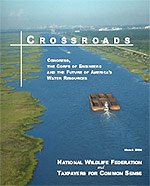
The Army Corps of Engineers was once one of our nation’s most reputable military services, using an incredibly accomplished staff to protect us from natural disasters and help plan our nation’s industrial infrastructure. But as NWF Senior Water Resource Specialist David Conrad tells us, "This agency is overwhelmed." Is more pork (from both sides of the aisle) the way to return it to its former glory? Post Katrina, I think everyone is hungry for something different. LISTEN (9 min)
Jeff Cleary of Blue Water Laundry tells Betsy about the dirty business of dry cleaning, particularly the practice of using perchloroethylene (perc, for short), and the three alternative methods (GreenEarth, CO2, and Wet Cleaning) that do the job without harming groundwater, air, or your body. Ask your dry cleaner for one of these options, and if they respond with a quizzical look, send them our way. If they give you stubborn disdain, let them know what the market demands, and that you’ll take your dollar to where you can find the supply. LISTEN (10 min)
Is bottled water "the greatest hoax ever perpetrated on the American people." Corporate Accountability International‘s Ashley Schaeffer tells Betsy that not only is the bottled water (owned by Coca-Cola, Pepsi, and Nestle) nearly identical to the water in your sink, and not only are they somehow convincing us to pay as much for water as we do for oil, but the prevalence of bottled water contributes to the undermining of the concept of water as a universal human right. There are people all over the world who are already paying the price, and emerging global conflicts over water bode ill for the future.
To change course, and to reassert the primacy of water in the lives of every human on Earth, each one of us needs to start thinking outside the bottle. LISTEN (9 min)
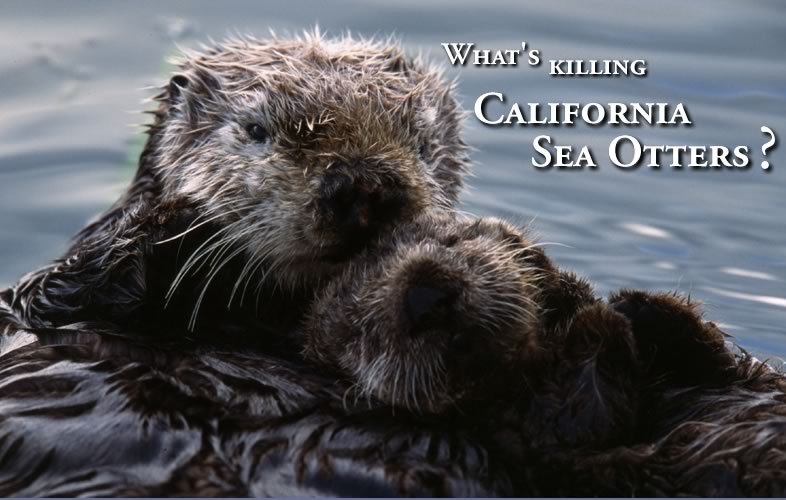 Daniel Hinerfeld tells the sad and shocking story of the Morro-Bay Cayucos sewage plant that the city refuses to upgrade asap.
LISTEN (7 min) and take action:
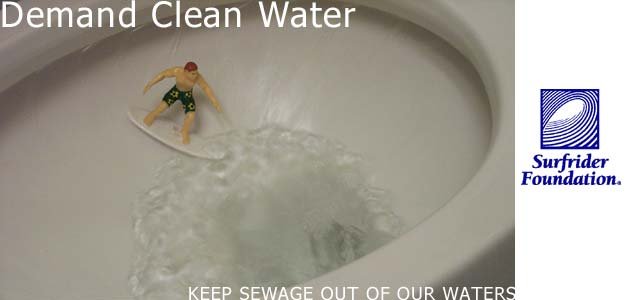
Image: Surfrider Foundation

Betsy says he sounds like one of the Car Talk guys. Ed says he’s a former comedian, and it’s pretty clear that Plumber Ed del Grande knows a heck of a lot about water conservation. He’s a spokesman for Kohler, and he chats with Betsy from Knoxville, TN, where he’s doing his own "Ed" show for HGTV. LISTEN (12 min)
Bob Feinbaum tells Betsy about the HydroNova water program. The assumption that sewer water is garbage is wrong. It is possible to use ‘living machines’ that mimic the cleansing properties of natural wetlands. Wastewater should not be wasted water. LISTEN (8 min)
If you have questions about the water treatment methods of your city, email Bob
picture
